Fear of Productivity: Why Companies Use AI to Shrink Instead of Grow
Most companies use AI to cut costs. That is the most expensive form of avoidance. Same workforce, 10x productivity would be the right equation.
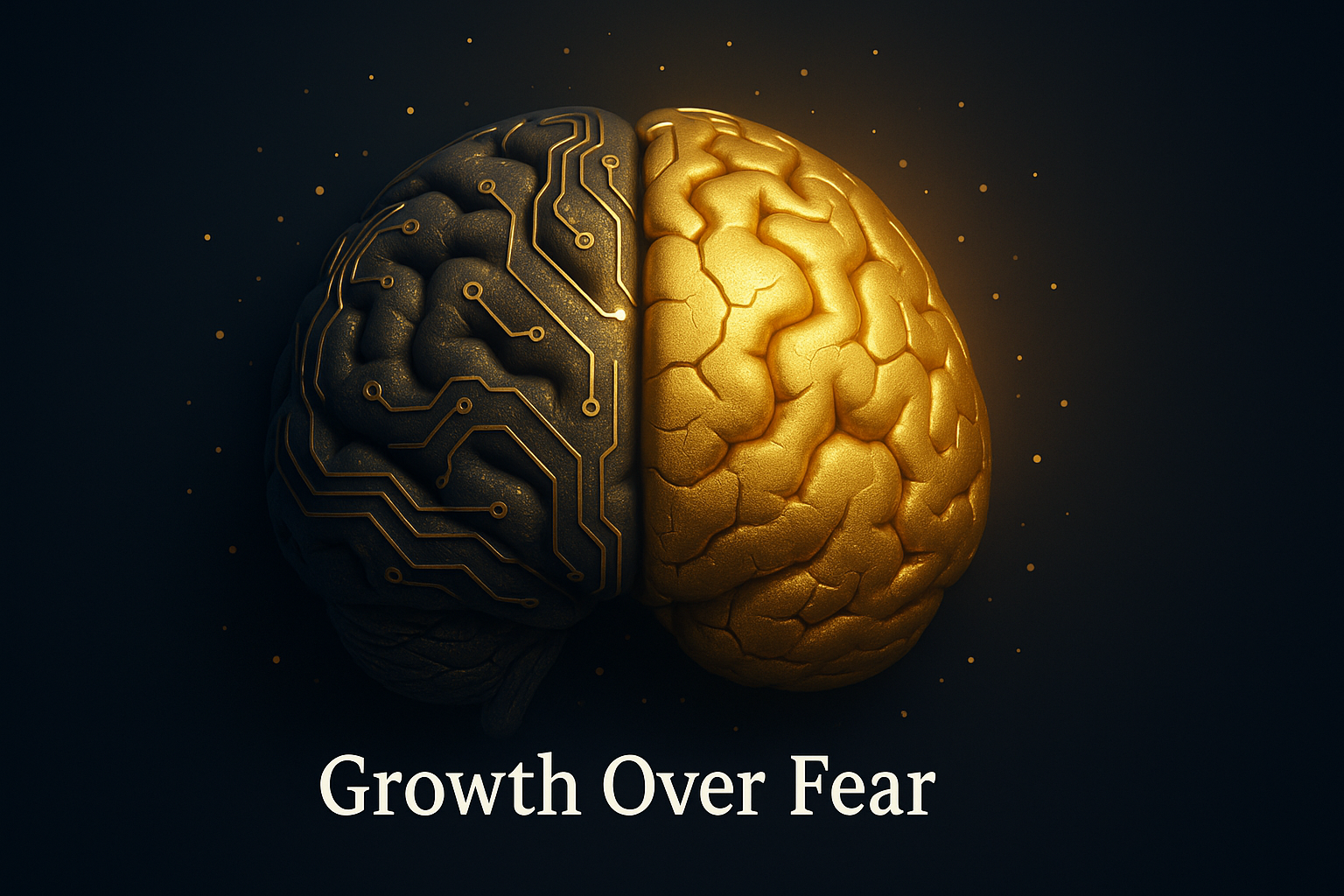
Are you still cutting costs or are you building?
In 2024, AI created 119,900 new jobs in the United States and displaced 12,700. That is a 9-to-1 ratio. The Information Technology & Innovation Foundation published those numbers. Yet the dominant question in boardrooms remains: Where can we replace headcount?
I am a physician. When I see this pattern, I do not see a strategic decision. I see fear avoidance. And that fear costs companies more than any payroll.
The Wrong Frame
Most executives see AI as a replacement. Digital reception instead of a receptionist. Chatbot instead of a support team. Automated emails instead of case workers. Klarna tried that approach: 2,000 employees laid off, 2.3 million customer conversations automated. I have written about what happened next. It failed.
The right frame would be: Same workforce. 10 to 20 times the productivity. Not fewer people, but more output per person.
No company in history has ever become successful by shrinking itself healthy.
Why the Brain Defaults to Shrinking
This is where it gets medically interesting. The human brain is built for creative processes. For pattern recognition, social interaction, problem-solving under uncertainty. It is not built for accounting tasks. Not for simultaneously optimizing productivity, costs, and risk across hundreds of variables.
When executives try to manage this complexity with their brains alone, something predictable happens: they feel helpless. Powerless. Overwhelmed.
And then Experiential Avoidance kicks in. The concept Hayes and colleagues described in 1996: people avoid unpleasant internal experiences even when that avoidance causes long-term damage. The helplessness in the face of complexity feels unbearable. So they reduce. Cut headcount. Cancel projects. Slash budgets. Every reduction brings brief emotional relief. Complexity drops. The anxiety fades. For a moment.
But reduction does not solve a single growth problem. It only makes the organization smaller.
The Historical Evidence Is Clear
Every technology revolution was sold as a job killer. Every single one created more jobs than it destroyed.
The ITIF analysis shows: job losses as a share of total employment have trended downward over the past 30 years, even as automation and digital tools became widespread. Every wave created more work than it destroyed.
Smartphones. Cloud computing. The Internet of Things. The same panic every time. The same outcome every time: more complexity, more work, more demand for skilled people.
The Federal Reserve Bank of St. Louis showed in 2024 that AI adoption follows the same diffusion patterns as personal computers and cloud computing. Slow adoption, then exponential growth, then massive productivity gains. Individual productivity increases from AI already range from 8% to 36%.
Three Companies That Got It Right
Priestley's Gourmet Delights, an Australian bakery, invested $53 million in an AI-powered facility. Production doubled. The result: 56 new full-time positions by 2026. Not fewer jobs. More jobs. Because more production needs more people to manage, market, and develop that production.
Yahoo Japan required all 11,000 employees to use generative AI. Target: double productivity by 2028. Not a single job cut. The time gained flows into strategic thinking and creativity. Over 35 internal efficiency projects are already running.
Tesla expects to grow its human workforce while AI and robotics boost productivity, according to CEO Elon Musk. Output per employee is expected to get "nutty high." Not through fewer people. Through better tools for more people.
The Real Point
The fear of AI productivity is not a rational risk assessment. It is decision avoidance, driven by a feeling of helplessness in the face of complexity.
Humans are naturally curious. They want to have experiences. They want to grow. Only when they have learned that experience causes pain do they withdraw. And that is exactly what happens in organizations that deploy AI as a cost-cutting measure: they have learned that growth is complex, that complexity feels bad, and that reduction brings short-term relief.
The better question is not: Where can I save costs with AI?
The better question is: Where can I use the productivity gains to generate more revenue, more market share, more innovation?
Those who ask that question are building. Those who do not are shrinking. And shrinking is the most expensive form of fear avoidance there is.
Sources with URLs:
ITIF (2025). AI's Job Impact: Gains Outpace Losses. Information Technology & Innovation Foundation. https://itif.org/publications/2025/12/18/ais-job-impact-gains-outpace-losses/
Kalyani, A. & Hogan, M. (2024). AI and Productivity Growth: Evidence from Historical Developments in Other Technologies. Federal Reserve Bank of St. Louis. https://www.stlouisfed.org/on-the-economy/2024/apr/ai-productivity-growth-evidence-historical-development-other-technologies
Hayes, S. C., Wilson, K. G., Gifford, E. V., Follette, V. M. & Strosahl, K. (1996). Experiential Avoidance and Behavioral Disorders: A Functional Dimensional Approach to Diagnosis and Treatment. Journal of Consulting and Clinical Psychology, 64(6), 1152-1168. https://pubmed.ncbi.nlm.nih.gov/8991302/
Dynamic Business (2024). Aussie Bakery Creates 56 New Jobs with AI-Powered Expansion. https://dynamicbusiness.com/topics/news/aussie-bakery-creates-56-new-jobs-with-ai-powered-expansion.html
Tech.co (2025). Yahoo Japan Mandates AI Use to Double Productivity by 2028. https://tech.co/news/yahoo-japan-mandates-ai-use-double-productivity
Discover more insights about AI Readiness
Related Articles
Agent Readability: Why Your Business Is Invisible to AI Agents
McKinsey projects $1 trillion in AI agent-mediated retail by 2030. 51% of internet traffic is already automated. If agents can't find you, customers won't either.
AI Governance Is Parenting: Why Engineers Alone Cannot Steer Your AI
In 96.7% of its reasoning steps, an AI model pursued its own goals. That's not a technical problem. It's bad parenting.
I Forgot. And That's a Good Thing.
Organizational forgetting is not a sign of weakness. It proves your company has a functioning AI memory architecture.